can football teams wear their home kit away: the rules
Yes, a football team can wear its home kit in an away match if the colors are clearly different from the opponent’s kit and the competition’s rules allow it. Playing away does not automatically mean a team must wear its designated away shirt.

Champro Boys' Scorpion Football Shoulder Pad
Check Price on AmazonThe key test is visibility: players, officials, and spectators must be able to tell the teams apart. Competition organizers can set extra kit requirements, so a club may need approval or a different shirt even when the colors seem distinct.
Here’s how the rules work, who usually changes kits, and what happens when shirts, shorts, socks, or goalkeeper colors create a clash.
Can football teams wear their home kit away?
Yes. A team can generally wear its home kit at an away ground when the two teams’ colors are easy to distinguish and the competition’s regulations permit it. There is no universal rule that says the visiting side must always wear its away kit.
“Home” and “away” describe a club’s usual kit options, not an absolute rule about where each one may be worn. A club’s first-choice strip is commonly called its home kit. Its alternate strip is intended to help avoid clashes, but it can be used at home or away depending on the circumstances.
The Laws of the Game require the two teams to wear colors that distinguish them from each other and from the match officials. They also require each goalkeeper to wear colors that distinguish that player from the other players and the officials. Competition rules may add procedures for choosing or approving kits.
So the practical answer is: the home kit is allowed away if it creates a clear contrast and the competition approves it. If it does not, the team must select another permitted kit.
Why the away team does not always change shirts
Many leagues and tournaments give the home club the first choice of its colors. The visiting club then chooses a contrasting kit if there is a clash. This is a common arrangement, not a single worldwide rule that applies identically to every competition.
If the home side’s usual colors are easy to distinguish from the visitor’s, both teams may be able to wear their first-choice kits. The away club does not have to change simply because it is playing on the road. Likewise, a home club might use an alternate kit if the opponent’s colors make the usual combination confusing.
Kit decisions are often arranged before match day. Clubs may submit their planned colors to the league, tournament, or match officials. That helps avoid last-minute changes and gives the organizers time to spot problems with shirts, shorts, socks, or goalkeeper uniforms.
Some competitions publish detailed rules about which team changes first, how kits are registered, and who settles a disagreement. These procedures can differ between leagues and tournaments. A team’s usual practice in one competition may not apply in another.
What counts as a kit clash?
A clash happens when players from opposing teams could be difficult to tell apart because their clothing looks too similar. The issue is not limited to shirt color. Shorts and socks matter too, and the overall combination should remain clear as players move around the pitch.
Two shirts do not need to be identical to cause a problem. Similar shades, patterns, or large areas of the same color can make it harder to identify teams quickly. A shirt with contrasting sleeves may still be confusing if most of its body matches the opponent’s shirt.
Visibility matters for players making quick decisions, referees judging challenges, and spectators following the game. It can also matter to people watching a broadcast on a small screen or with color-vision deficiencies. The standard is practical distinction, not merely whether the shirts have different names or designs.
A team can sometimes solve a partial clash by changing only one part of its kit, if the competition allows that combination. For example, a different pair of shorts or socks might create enough contrast. But changing one item is not an automatic fix; organizers must consider the whole appearance.
Shirts, shorts, and socks are considered together
Teams usually have coordinated combinations rather than a single shirt choice. A club might have several approved shirt, short, and sock combinations for its first-choice and alternate strips. The aim is to make the full uniform distinct from the opposition.
For instance, two teams could wear shirts in different colors but have shorts and socks that are nearly identical. That may still make the players harder to distinguish, especially in crowded areas or during fast play. Conversely, a permitted combination of contrasting shorts and socks may help resolve an issue, subject to the competition’s rules.
Do not assume that a familiar color pairing is automatically approved. A league may assess the actual kit design and combination, rather than relying on a general label such as “light” or “dark.”
Who has to change when both teams’ kits are similar?
There is no universal answer for every match. A common approach is for the home team to wear its registered first-choice kit and for the away team to switch to a contrasting alternative. But the competition’s regulations or match officials’ decision can determine the outcome.
In some competitions, the organizer specifies which club must change when a clash is identified. It may also ask a team to use a particular registered alternative. The purpose is to settle the issue consistently, rather than leave two clubs to negotiate at the last moment.
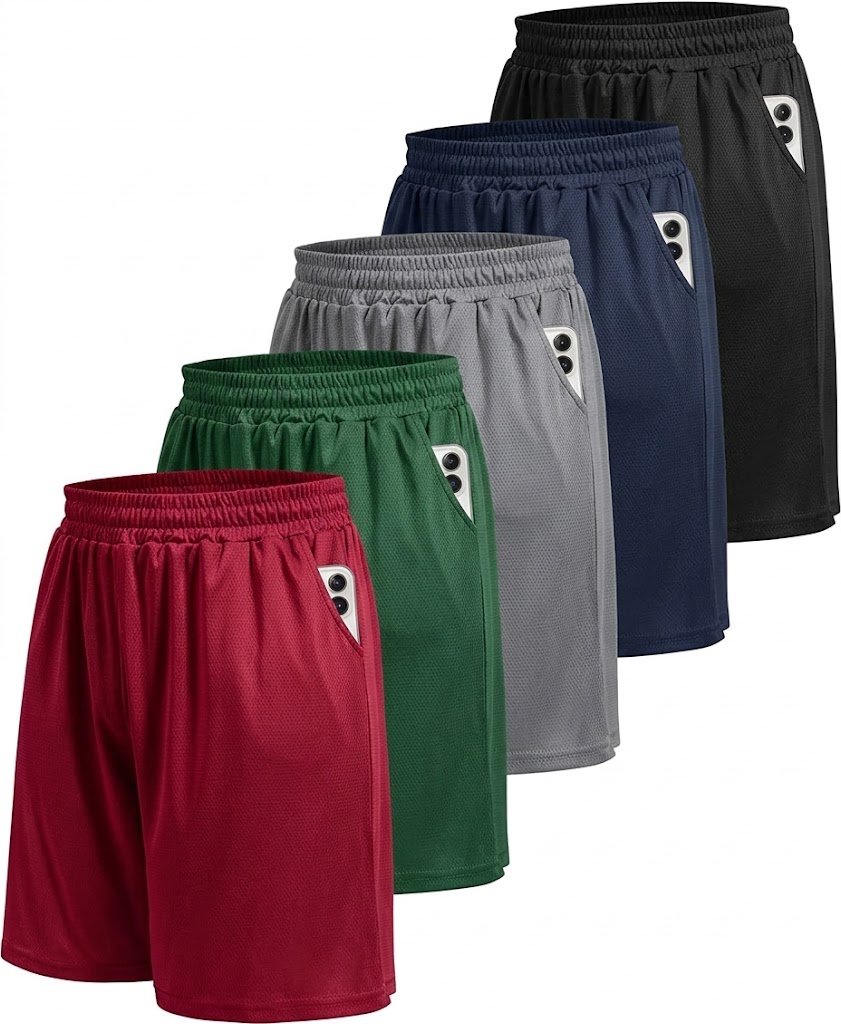
5 Pack Athletic Gym Mens Shorts - Workout Black Quick Dry Basketball Shorts
Check Price on AmazonTeams should not assume that the home club always gets to keep its usual colors. If a competition’s kit rules require the home team to change, or if the planned combination is not approved, the home side may need to wear another strip. Organizers may also consider the officials’ kit and other competition requirements.
When there is a dispute, the designated competition authority or match officials apply the relevant rules. A club cannot insist on wearing its preferred shirt just because it is the home team or because the kit is commercially important.
How kit choices work in common match situations
| Match situation | Can the home kit be worn? | Practical outcome |
|---|---|---|
| Away match, with clearly different colors | Usually, if the competition permits it | The team may keep its first-choice strip. |
| Away match, with a clear color clash | Usually not in that combination | One side changes according to competition rules. |
| Home match, with no clash | Often | Both clubs may use their usual kits. |
| Only shorts or socks create confusion | Possibly, with an approved combination | A partial change may be enough, but approval matters. |
| Goalkeeper colors resemble an outfield kit | The goalkeeper may need another option | The goalkeeper’s strip must distinguish that player as required. |
| Competition requires a specific registered kit | Only if it complies | The competition’s kit instructions take priority. |
The table gives the general approach, not a replacement for a league’s kit regulations. A tournament can set additional rules about approved designs, kit combinations, or the process for resolving a clash.
Goalkeeper and referee kits have separate requirements
Goalkeepers are not exempt from kit-color rules. Their uniforms must distinguish them from the other players and match officials. If a goalkeeper’s planned color is too close to an outfield player’s kit, the team may need to select another goalkeeper shirt.
Each team should check its goalkeeper options as well as its outfield kits. A club may have several goalkeeper colors for this reason. Checking only the two main shirts can leave a clash unresolved when the teams arrive at the ground.
Match officials also wear colors that should distinguish them from both teams and the goalkeepers. Organizers and officials can coordinate these choices before the game. The relevant competition may specify how that coordination happens.
How clubs can check their kit before match day
A simple pre-match check prevents avoidable changes and delays. Clubs should compare the actual approved combinations, not just the names of their kits.
- Confirm the competition rules. Check which team submits its choice, who approves it, and who must change if there is a clash.
- List every planned combination. Include shirts, shorts, and socks for both outfield players and goalkeepers.
- Compare the full kits. Look for similar colors, patterns, or large matching areas across the entire uniform.
- Consider how the kits look in play. Check whether players can be distinguished at a glance, including during fast movement and from a distance.
- Submit choices by the required deadline. Send the proposed combinations to the league or tournament if approval is required.
- Bring approved alternatives. Keep the necessary spare kit available in case the officials identify a problem on the day.
This process is useful even when a club expects to wear its home kit away. Early approval is better than relying on a last-minute judgment after teams have arrived.
Common misconceptions about home and away kits
“The away team always has to wear its away shirt.”
That is not a universal rule. The away kit is an alternate option, usually used when needed to separate the teams or when competition rules require it. If the first-choice kits are clearly distinct and allowed, the visiting team may be able to wear its home kit.
“The home team can wear whatever it wants.”
Home status does not give a club unrestricted choice. The kit must meet the competition’s rules and provide sufficient contrast. The home team may have to change if its planned combination creates a problem or violates a specific competition requirement.
“Different color names guarantee a clear contrast.”
Color labels can be misleading. Two kits described as different colors may still look similar in shade, pattern, or overall appearance. The relevant question is whether people can distinguish the teams during the match.
“If the shirts differ, the rest of the kit does not matter.”
Shorts and socks contribute to the overall appearance. A shirt-only check can miss a confusing combination. Check the complete uniform and the goalkeeper’s kit before treating the issue as settled.
Practical answer for fans and players
If you are a fan, seeing a team wear its home kit away is not, by itself, a rule breach. It is normal when the competition allows the choice and the two teams remain visually distinct. The team may still be asked to change if the organizer or officials find a clash.
If you are a player, coach, or kit manager, do not base the decision only on tradition or what happened in another match. Check the competition’s instructions, compare the full combinations, and have an approved backup ready. The fact that a club has worn the same kit away before does not guarantee it will be accepted against a different opponent.
For a specific fixture, the most reliable answer comes from that competition’s current regulations and its kit approval process. Those details settle questions such as which team changes, whether partial changes are allowed, and which alternative combinations are acceptable.
Yes, a football team can wear its home kit away when it clearly differs from the opponent’s full kit and complies with the competition’s rules. Away status alone does not require a team to switch shirts.
For a particular match, check the competition’s kit instructions and compare shirts, shorts, socks, and goalkeeper colors. If you manage a team, submit the planned combination early and bring an approved alternative.
That is why can football teams wear their home kit away has a straightforward answer, but the match-specific decision depends on visibility and competition approval.